
.svg)
How Basketball AI Is Revolutionizing the Game: Stats, Highlights, and the Future of Hoops
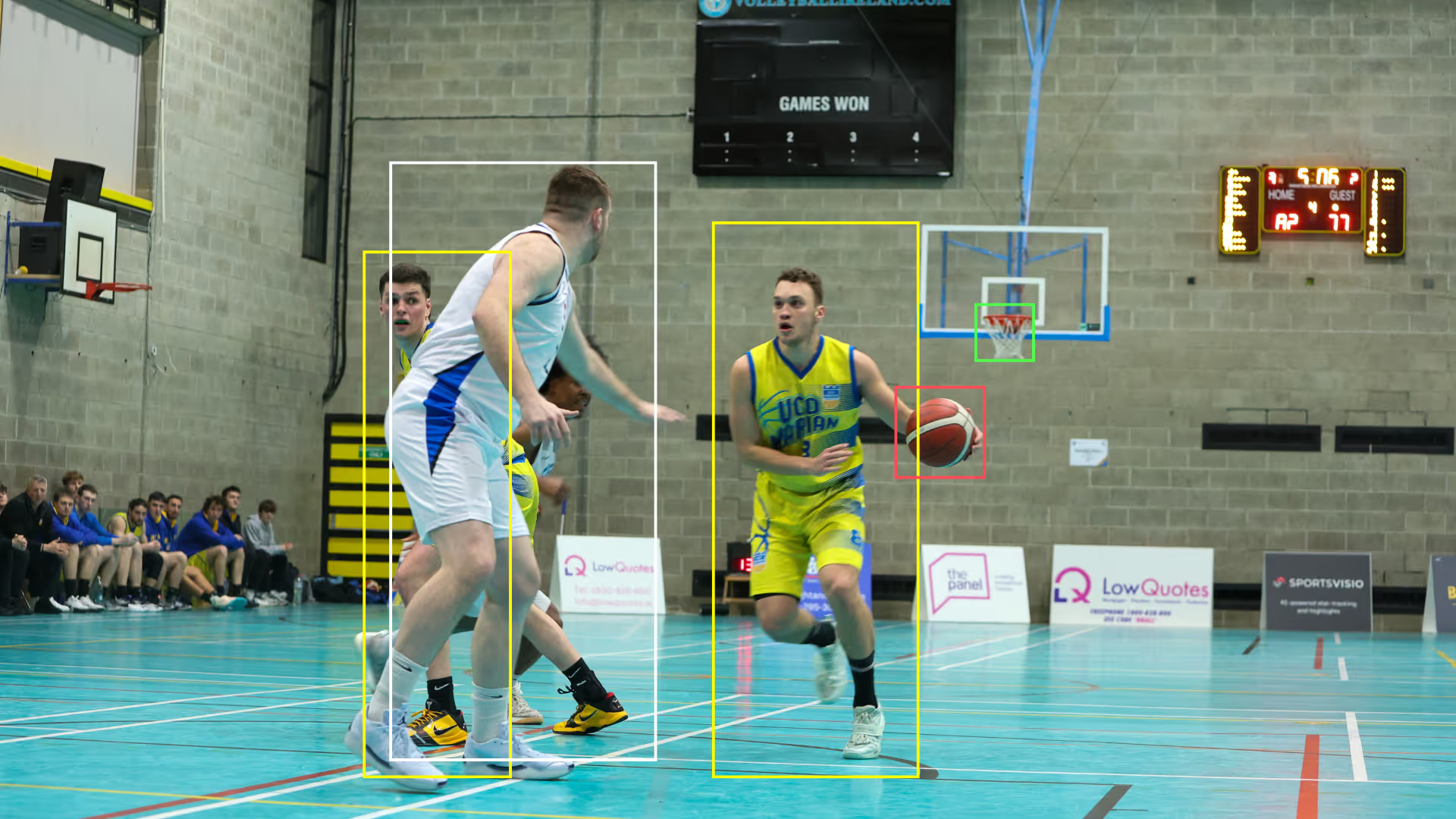
A decade ago, getting real stats out of a game meant a parent hunched over a clipboard, a coach scrubbing through three hours of film, or a team paying for a scorekeeper who still missed half the action. Today you point a phone at the court, hit record, and an AI hands you a full box score and a highlight reel before the team finishes shaking hands. That shift has a name, and it is basketball AI.
This guide walks through what basketball AI actually is, how it turns raw footage into usable data, what it can track, who is already using it, and how the leading tools stack up against each other in 2026.
What Is Basketball AI?
Basketball AI is the use of artificial intelligence, mainly computer vision, to watch a game the way an analyst would and turn what it sees into data. Instead of a person logging every shot, rebound, and assist by hand, machine learning models trained on millions of basketball plays identify the players, follow the ball, and record what happens on every possession.
The result is the kind of breakdown that used to live only inside NBA front offices: a complete box score, possession-by-possession detail, shot locations, and clipped video for every play. The difference now is that a youth coach, a club parent, or a rec-league player can get the same thing from a phone on a tripod.
From Box Scores to Computer Vision
Basketball has always run on numbers, but for most of its history those numbers were thin and slow to get. The box score gave you points, rebounds, and assists. Anything deeper meant manual film study or a stats crew most teams could not afford.
Three things changed that. Cameras got good enough that ordinary phone footage is clean enough to analyze. Computer vision models learned to recognize basketball actions with real accuracy. And cloud processing made it cheap to run that analysis on a full game without a server room. Put those together and the advanced metrics that decided NBA contracts, true shooting percentage, effective field goal percentage, plus-minus, are now sitting in an app on a 12-year-old's phone. For the longer story of how the stat sheet got here, see our evolution of basketball stats.
How Basketball AI Actually Works Today
The experience is simple on purpose: record, upload, review. Underneath that simplicity is a real pipeline. Here is what happens between the final buzzer and the moment your stats appear.
1. Capture. You record the game on any device, a phone, a tablet, a fixed camera, framed so the full court is in view. There are no sensors to install, no wearables to charge, no special hardware to buy. If you can film the game, the AI can read it.
2. Upload. You send the footage up with a few game details, teams, jerseys, date. From there it is hands-off.
3. Detection. Computer vision models go to work frame by frame. They track the ball, recognize each player, and classify what is happening: a shot goes up, it falls, a rebound is grabbed, a pass becomes an assist, a defender forces a turnover.
4. Attribution and assembly. Each event gets tied to the right player and stitched into a full box score, while the matching video gets clipped into per-stat highlights and individual reels. For a deeper technical walkthrough, read how AI basketball analysis works.
How accurate is it? On consumer-recorded game video, event detection (made shots, rebounds, fouls) runs at 95%+ accuracy, and attribution to the correct player runs at 92%+. That is the line that separates a usable stat sheet from a guess, and it is why footage quality and a full-court frame matter more than an expensive camera.
The whole point is that the hard part is invisible. You record the game. The AI does the rest.
What Basketball AI Can Track
A good basketball AI does not just count baskets. It produces the same categories a college analyst would expect, plus the video to back every number up:
- Scoring and shooting: points, shots made and missed, and shot charts that show exactly where points came from
- Possession stats: rebounds, assists, steals, blocks, turnovers, and personal fouls
- Advanced metrics: true shooting, effective field goal percentage, plus-minus, and game-flow views that show how momentum swung
- Video per stat: every tracked event is linked to its clip, so a "12 points, 6 rebounds" line is also six rebound clips you can actually watch
That last piece is what turns numbers into something a player or coach can use. A stat tells you what happened. The clip tells you why.
Real Use Cases: Players, Coaches, Leagues, and Parents
Basketball AI is not a single product for a single buyer. The same underlying technology solves a different problem for each person standing around the court.
Players finally get a clear picture of their own game. Instead of a vague sense of "I played well," they see their shooting splits, their rebounding, where their points come from, and a highlight reel they can send to a recruiter or post the same night. Seeing your game laid out like this is how you find the one habit worth fixing.
Coaches stop spending Sunday night with a clipboard. They get a full team box score, opponent tendencies, shot charts, and clips ready for film sessions, the kind of breakdown that used to require a dedicated staffer. With tools like Coach Mode, that extends to advanced box scores, shot signatures, and an AI assistant that surfaces lineup and matchup insight.
Leagues and operators use it to give every team in the building a pro-style experience: automatic stats, leaderboards, and shareable highlights that keep players and families coming back. It turns a rec league into something that feels like a broadcast.
Parents get the thing they actually want, which is to never miss the moment, plus real tools to help an athlete get seen. The recruiting reel that took a videographer a weekend now comes out of a phone recording.
How the Top Basketball AI Tools Compare in 2026
"Basketball AI" covers a few very different approaches. Some tools read video automatically, some still rely on people tagging plays, some need installed sensors, and some are built for solo training rather than full games. Here is how the leading options line up.
SportsVisioHooperHoopsalyticsShotTrackerHomeCourtHow stats are capturedAutomatic AI from any-device videoAutomatic AI from phone videoHuman scorekeepers / manual tagging (~12 hr)Sensor system (Helix/Pulse) + AI scouting (Scout)AI from phone video, drills onlyGame stats producedFull box score + advanced (Coach Mode)Box score (scoring-focused)Full box score (human-built)Full box score (real-time)Drill / shot stats only, no game box scoreHighlight reelsYes, auto per playerYes, auto (AI mixtapes)Manually clipped from tagged eventsFan / broadcast clips (no auto-reel)NoHardware requiredNoneNoneNoneSensors required for core statsNoneSportsBasketball 5v5, 3x3, + volleyballBasketball onlyBasketball onlyBasketball onlyBasketball onlyBuilt forPlayers, coaches, leagues, parentsPlayers, parents, teams, leaguesCoaches / programs (also players, parents)Pro, college, HS programsIndividual training (team tools available)
A few takeaways from that table:
- Hooper is great for pickup games and getting highlights to your phone.
- HomeCourt is built for solo drills and skill work, with personal shooting and ball-handling metrics rather than full game box scores.
- Hoopsalytics delivers human-verified stats, but on an hours-long turnaround because people do the tagging, not computer vision.
- ShotTracker's core stats run on installed sensor hardware, built for elite programs that can wire up a gym.
- SportsVisio is built for automatic, full-game stats and highlights for a whole team, across basketball and volleyball, with no hardware.
Different tools, different jobs. The right one depends on whether you are tracking one player's jumper or running a season for a team. If you want the deeper buying guide, see our breakdown of the best basketball analytics software and our SportsVisio vs Hudl comparison.
What Sets SportsVisio Apart in Basketball AI
SportsVisio's bet is that the technology should disappear and the result should not. A few things make it stand out:
- Bring your own device. No sensors, no wearables, no install. If you can record the game, you are done.
- Full game, fully automatic. A complete box score and per-player highlights from a single upload, not a drill tracker and not a manual tagging service.
- More than basketball. SportsVisio covers 5v5, 3x3, and volleyball, so a club or operator running multiple programs is not stitching together three different tools.
- Fully featured: leagues get registration, scheduling, leaderboards, standings, and insights for every game that can easily be shared.
- Built for the whole court. Players, coaches, leagues, and parents each get a view built for them, from recruiting reels to Coach Mode analytics to league-wide leaderboards.
- Phone and PC Access. Our software is optimized for phones and optimized for sitting down on your computer. You choose your access points.
As Duncan Robinson of the Detroit Pistons put it: "SportsVisio is a secret weapon. Quick access to stats and highlights is like having a coach and a video assistant in my pocket."
The Future of Basketball AI
The stat sheet was step one. The next wave is about what the AI tells you to do with it. Expect predictive layers that flag a developing weakness before it costs games, automated scouting that turns an opponent's last five games into a one-page plan, and real-time analysis that runs on the sideline instead of overnight. As models get better at reading intent and not just events, the line between "what happened" and "what to do next" keeps shrinking. The teams that adopt early are building a decision-making edge that the rest of the field will spend years catching up to.
How to Get Started With Basketball AI
You do not need a budget or a tech background to start. The path is the same one the pros are on, just without the staff:
- Record your next game on any device, framed so the whole court is in view.
- Upload the footage with a few quick game details.
- Open the app to your full box score, shot charts, and highlight reels.
That is it. Record the game. We do the rest.
Frequently Asked Questions
What is basketball AI?
Basketball AI is the use of artificial intelligence, mainly computer vision, to automatically analyze game video and produce stats, highlights, and actionable insights. Instead of a person tracking the game by hand, AI models identify players, follow the ball, and record every shot, rebound, assist, and turnover, then assemble it into a box score and clipped video.
How accurate is AI basketball stat tracking?
On consumer-recorded game footage, leading systems detect events like made shots, rebounds, and fouls at 95%+ accuracy and attribute them to the correct player at 92%+. Accuracy depends most on filming the full court with a steady, clear view, not on expensive equipment.
Do I need special cameras or sensors?
No. Software-based basketball AI like SportsVisio works from video recorded on any device, a phone, tablet, or fixed camera. Sensor-based systems exist for elite programs that can install hardware, but they are not required to get a full box score and highlights.
Can AI track stats for youth and amateur basketball?
Yes. This is where AI has the biggest impact. The advanced stats that were once limited to teams with paid analysts are now available to youth, club, AAU, and rec league players from a single phone recording.
Does basketball AI work for 3x3?
Yes. SportsVisio supports 3x3 basketball alongside the 5v5 game, with stats and highlights tuned to the half-court format.
How is basketball AI different from a stats app where I tap in plays?
Tap-in apps still rely on a person watching and logging every play in real time, which is slow and easy to get wrong. AI stat tracking reads the video itself, so you record the game and get the full breakdown without tagging anything by hand.
Can I get highlight videos, not just numbers?
Yes. Every tracked stat is linked to its video clip, and the AI assembles per-player highlight reels automatically. A scoring line becomes a set of clips you can watch, post, or send to a recruiter.
How long does it take to get my stats after a game?
With automatic AI tools, your box score and highlights are typically ready within 12-24 hours after the footage finishes uploading.
How much does basketball AI cost?
Full-team automatic stat-and-highlight platforms like SportsVisio run a per-team subscription with a Coach Mode season plan and per-game options for 3x3, all listed on our pricing page.
See your game like never before
Record your next game on any device, and let AI turn it into a full box score and highlight reel. Coaches, players, and leagues use SportsVisio to get pro-style stats and video without the pro-style staff. Book a demo or start your free trial.
Related Stories
.webp)
Book a Demo and Get a Free Trial
Set up time to speak with our team and see our product in action.